


The complexity of urban development in modern American cities demands precision, accountability, and foresight. As cities face mounting pressures from population growth, infrastructure aging, and environmental concerns, the role of data analytics has shifted from supplementary to foundational in the urban planning process. By systematically analyzing high-volume datasets from sensors, citizen platforms, and municipal systems, city planners are now equipped to make informed decisions that align long-term development goals with real-time performance indicators.
Across the United States, data is being treated not simply as information, but as infrastructure in itself—supporting decisions that impact transportation flow, public health, zoning, and emergency management. This analytical shift is not speculative. Cities like New York, San Francisco, and Chicago are actively integrating predictive and geospatial analytics into planning departments to ensure that public investments are responsive, scalable, and accountable.
Infrastructure Optimization through Predictive Analytics
Predictive modeling enables municipalities to anticipate infrastructure demands and maintenance cycles with greater accuracy. San Francisco’s Public Works Department, for example, uses data analytics to prioritize repairs on roads, bridges, and water systems based on condition scoring and usage patterns. This data-first approach reduces unexpected failures, shortens response times, and supports cost-effective budgeting for infrastructure investments.
The American Society of Civil Engineers notes that predictive maintenance can reduce long-term infrastructure costs by up to 30% while increasing asset reliability. These outcomes are increasingly vital as aging infrastructure, particularly in older cities, competes for limited capital budgets. Predictive systems also support compliance with federal regulations by documenting proactive maintenance over time. (sapiensds.com)
Enhancing Transportation Systems with Real-Time Data
Advanced data systems are being used to improve traffic flow, reduce emissions, and streamline public transit. In Los Angeles, machine learning and computer vision are embedded in traffic signals to dynamically adjust timing based on congestion, time of day, and pedestrian flow. The system has reduced average wait times and is helping the city meet its Vision Zero traffic safety goals.
Real-time data from GPS, transit cards, and roadside sensors allows transit departments to adjust services on-demand. This adaptability is critical as commuting patterns evolve post-pandemic. According to the same source, cities applying AI-based traffic control have seen as much as a 25% reduction in delays and a measurable improvement in air quality. (sapiensds.com)
Advancing Public Safety via Data-Driven Strategies
Public safety operations in urban areas increasingly rely on data to allocate resources and prevent crime. New York City’s CompStat system has become a benchmark in real-time crime mapping and performance tracking, enabling precincts to respond more efficiently to trends and hotspots. The system collects and analyzes incident data daily, allowing strategic deployment of officers and targeted interventions.
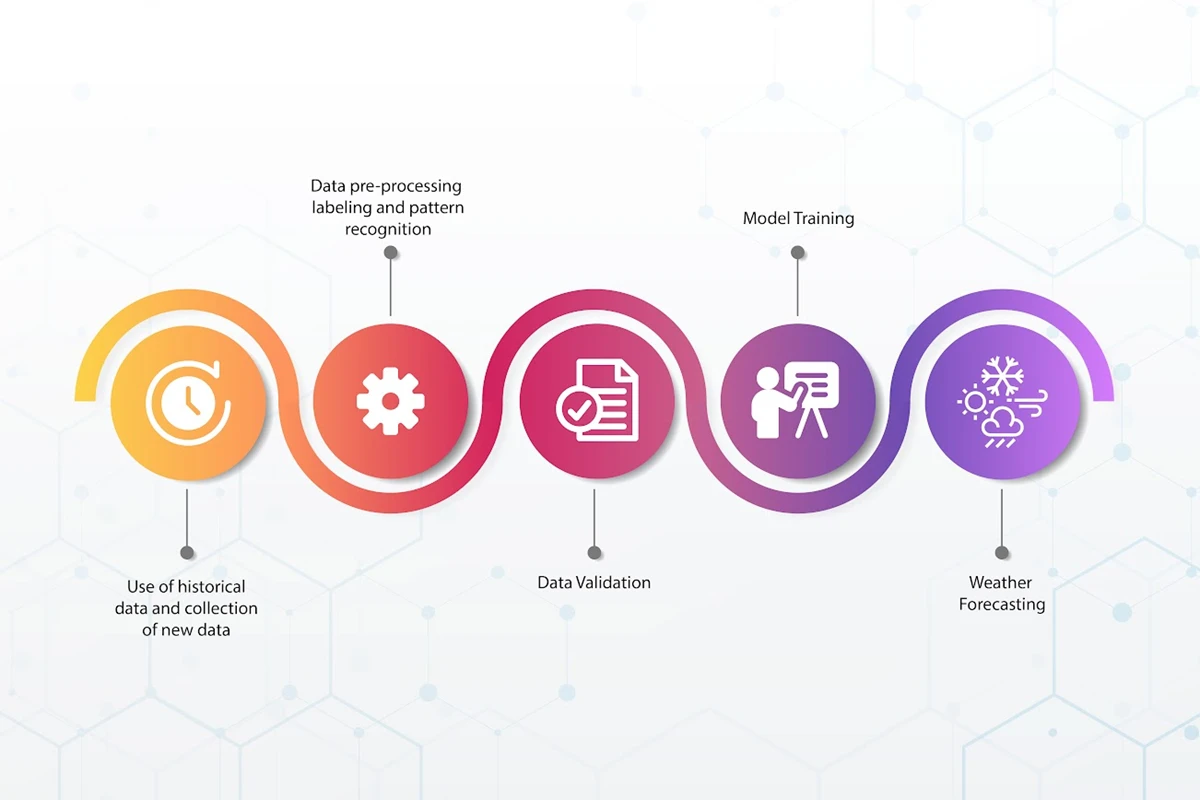
Beyond law enforcement, fire departments and EMS services use predictive analytics to determine future call volumes based on weather patterns, community events, and demographic shifts. Weather-related predictions are generated using historical climate data, which is cleaned, labeled, and validated to ensure accuracy. This processed data is then used to train models that forecast emergency call spikes during specific conditions—like heatwaves or storms—allowing agencies to better allocate resources and reduce response times while ensuring equitable coverage across diverse neighborhoods.(sapiensds.com)
Sustainable Urban Development through Environmental Monitoring
Urban sustainability goals are increasingly shaped by data streams from air quality monitors, utility meters, and green building management systems. Smart building technologies and municipal dashboards allow cities to monitor energy use in real time, automatically adjusting lighting, HVAC, or irrigation to conserve resources. This results in both economic and environmental benefits.
Cities like Boston and Seattle use environmental data to guide zoning changes, limit emissions, and optimize waste collection. Singapore’s sensor-driven waste management system has reduced operational costs while increasing recycling rates. In the U.S., similar models are being adopted to align city services with emissions reduction targets and state-level climate commitments. (logisticsgulfnews.com)
Facilitating Citizen Engagement and Transparent Governance
Open data platforms are giving residents access to information that was previously available only to internal government stakeholders. This transparency builds trust and encourages residents to actively participate in planning efforts. Interactive GIS maps, zoning portals, and participatory budgeting tools allow citizens to provide input on everything from new bike lanes to major infrastructure projects.
Barcelona’s civic tech ecosystem has been cited as a model for using data to enhance transparency. In the U.S., cities like Boston and Philadelphia are following suit with open dashboards and data visualization tools that demystify planning decisions and foster public accountability. (incfoundation.com)
Economic Growth through Data-Informed Urban Planning
Urban economic development is closely tied to how cities collect and interpret data. By using analytics to optimize zoning, workforce planning, and business licensing, cities create environments that are attractive to investors, startups, and developers. Barcelona’s data-centric approach to infrastructure planning has contributed to a 30% increase in tech startup formation and foreign investment since 2020.
In the U.S., smart districts such as Detroit’s innovation corridor and Atlanta’s SmartATL are drawing private capital by showcasing transparent data practices and measurable outcomes. These data-driven strategies enable cities to align their physical infrastructure with economic strategies, workforce development goals, and housing needs. (medium.com)
As American cities pursue sustainability, efficiency, and resilience, data is emerging as the foundation of effective planning. Rather than serving as a supplementary tool, analytics are now central to how cities design infrastructure, deliver public services, and engage with residents. This shift toward data-centered planning ensures that future urban development is not only smarter, but also more equitable, scalable, and measurable.