

This year-end review is written for city, county, and parks and recreation leaders who spent 2025 balancing limited staff, growing expectations, and increasingly complex systems. Across the year, one theme came through clearly: cities are ready to act, but only when technology helps teams work smarter, not harder.
In 2025, Varidx worked alongside public-sector teams as a partner, implementer, and educator, helping turn conversations about data, AI, and connected infrastructure into practical steps forward. What mattered most was not theory, but outcomes cities could actually use.
Starting the Year with Practical Guidance
Varidx opened 2025 with a January webinar, Kick Off Your Smart City Journey in the New Year, focused on a question city leaders repeatedly ask: where do we start without creating disconnected pilots?
The discussion emphasized prioritizing real use cases, aligning technology with policy and staffing realities, and choosing systems that adapt as budgets and community needs change. This theme echoed throughout the year as cities looked for platforms that could evolve rather than lock them into rigid approaches.
Where City Decisions Are Made
In February, conversations at the North Carolina Parks and Recreation Directors Conference (https://www.ncrpa.net/) reinforced how data can directly support safer, more accessible public spaces. Leaders shared challenges around staffing, reporting, and understanding how facilities and trails are actually used day to day.
Later in the year, similar themes surfaced at the Virginia Recreation and Park Society’s 71st Annual Conference (https://www.vrps.com/). Agencies discussed how better visibility into usage and operations could help coordinate teams, justify budgets, and improve community engagement.
At ASLA, discussions highlighted how technology decisions intersect with design, sustainability, and user experience. Particularly in parks and public spaces, leaders emphasized that trust and usability matter just as much as technical capability.
Across these events, one message was consistent: cities want integrated views they can use during a busy shift, not more isolated dashboards.
AI in Practice, Not Theory
Varidx spent much of 2025 helping move AI discussions from abstract promise to real application.
In March, the Smart City Series: American Microchip Revolution explored how advances in chip technology are shaping sensing, data collection, and real-time analytics at the city scale. The focus was not on hype, but on what these advances make possible for reliability and responsiveness in urban systems.
That momentum continued in April at the Smart Transport Symposium: Shaping the Future of Urban Mobility (https://selsled.com/), where city teams examined how coordinated data can improve movement, access, and transportation planning without replacing existing infrastructure.
At the NCLGISA Spring Symposium (https://www.nclgisa.org/) in May, IT leaders dug into implementation realities. Discussions centered on interoperable approaches that allow systems from different vendors to share data without one-off custom work, supporting long-term operations instead of short-lived tools.
These conversations directly informed how Varidx prioritizes features that make AI explainable, configurable, and aligned with public-sector governance requirements.
AI for Smart Cities: Turning Dialogue into Direction
A major milestone in 2025 was AI for Smart Cities: Innovation, Intelligence, Impact. Shaping the Future Together, hosted by Varidx with Wake Technical Community College (https://www.waketech.edu/).
The in-person session brought together city officials, planners, engineers, educators, and innovators for an honest discussion on how AI is already being used in transportation, emergency response, and public services.
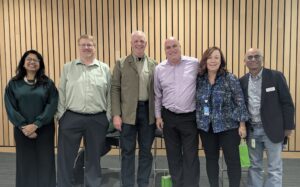
Participants explored live demonstrations showing how smart city technologies function in practice, alongside open conversations on ethics, sustainability, governance, and citizen impact. Rather than promoting specific solutions, the event helped several attendees clarify their next steps, from shaping RFP requirements to identifying pilot opportunities aligned with real operational needs.
Smarter Parks and Public Spaces in Action
In December, Varidx participated in the 2025 Carolinas Conference, hosted by the North Carolina Recreation & Park Association (https://www.ncrpa.net/) and the South Carolina Recreation & Parks Association (https://www.scrpa.org/).
There, Varidx demonstrated how connected data supports parks and recreation teams in practical ways:
- People counting to understand facility and trail usage, such as identifying peak weekend staffing needs
- Safety and situational awareness through movement alerts in sensitive or after-hours areas
- Resource optimization to reduce unnecessary maintenance trips and adjust energy usage in underused facilities
- Mobility and access insights to improve parking flow and visitor circulation
- Environmental monitoring to track weather and water levels for earlier risk awareness
Live demos showed how agencies can use existing cameras and sensors, avoiding new hardware purchases while still gaining real-time insight. One city event example demonstrated how AI-based people counting replaced manual clickers, giving staff accurate crowd counts without compromising privacy.

From Pilots to Real Outcomes
Beyond events, 2025 included hands-on work with cities moving toward deployment. Examples included:
- Helping a coastal city consolidate flood-level data from multiple locations into a single dashboard, allowing staff to configure alerts and communicate risks to residents earlier
- Supporting a growing town in unifying traffic cameras and parking sensors into one operational view for its control center
- Assisting agencies in reducing manual reporting by bringing fragmented data into a single, configurable interface
These efforts reflected a consistent goal: reduce complexity while improving decision-making.
Growing with New Cities
As Varidx worked with new towns and cities across the U.S., common challenges emerged. Data silos, evolving requirements, and limited resources continue to shape how technology is adopted.
Staying closely engaged with city teams allows Varidx to design platforms that support daily decisions while remaining flexible enough to change as needs evolve.
What Varidx Is Focused on Next
Looking ahead to 2026, Varidx is focused on helping cities move faster with confidence by:
- Supporting interoperability with commonly used cameras, sensors, and systems
- Helping agencies design pilots that align with grant requirements and long-term roadmaps
- Expanding park safety and operations use cases that reduce staff workload
- Making AI more transparent, configurable, and aligned with public-sector governance
Looking Ahead
2025 was about showing up, listening closely, and helping cities move from ideas to deployed systems. As public-sector teams continue navigating change, Varidx remains committed to building technology that supports real work, real constraints, and real communities.
The conversations ahead matter because they shape what cities can actually do next.