


As urban centers across the United States increasingly adopt Internet of Things (IoT) technologies to optimize municipal services, the cybersecurity of these interconnected systems has become a priority for city planners and IT departments. The integration of IoT into public infrastructure, ranging from traffic signals and utilities to surveillance and environmental sensors—introduces vulnerabilities that can be exploited if left unaddressed. A clear understanding of the most pressing risks, alongside preventive measures, is critical to ensuring the integrity and safety of urban digital ecosystems.
1. Inadequate Authentication Mechanisms
Many IoT devices are shipped with default login credentials or minimal password requirements, leaving them open to basic credential-stuffing attacks. Unauthorized access through unsecured authentication can lead to surveillance system tampering or manipulation of traffic control systems. Government agencies and municipalities must enforce stronger password policies and implement multi-factor authentication or certificate-based access. (SentinelOne)
2. Outdated Firmware and Software
A large percentage of IoT devices operate on outdated software stacks, which often lack current security patches. Attackers exploit these known vulnerabilities, targeting older firmware with readily available exploits. Maintaining a consistent update cycle, ideally through automated over-the-air patching, helps mitigate long-term exposure. Municipal IT departments should also conduct periodic audits to assess firmware status across all devices. (SentinelOne)
3. Susceptibility to Botnet and DDoS Attacks
IoT devices are frequently used as entry points for botnets, which can be orchestrated to execute large-scale Distributed Denial of Service (DDoS) attacks. The Mirai botnet incident remains a case study in how unsecured smart devices, particularly routers and security cameras can be compromised and turned against their networks. City-wide IoT deployments must be protected with robust network segmentation, intrusion prevention systems, and traffic analysis tools to quickly detect and isolate malicious activity. (ManageEngine)
4. Shadow IoT and Unregistered Devices
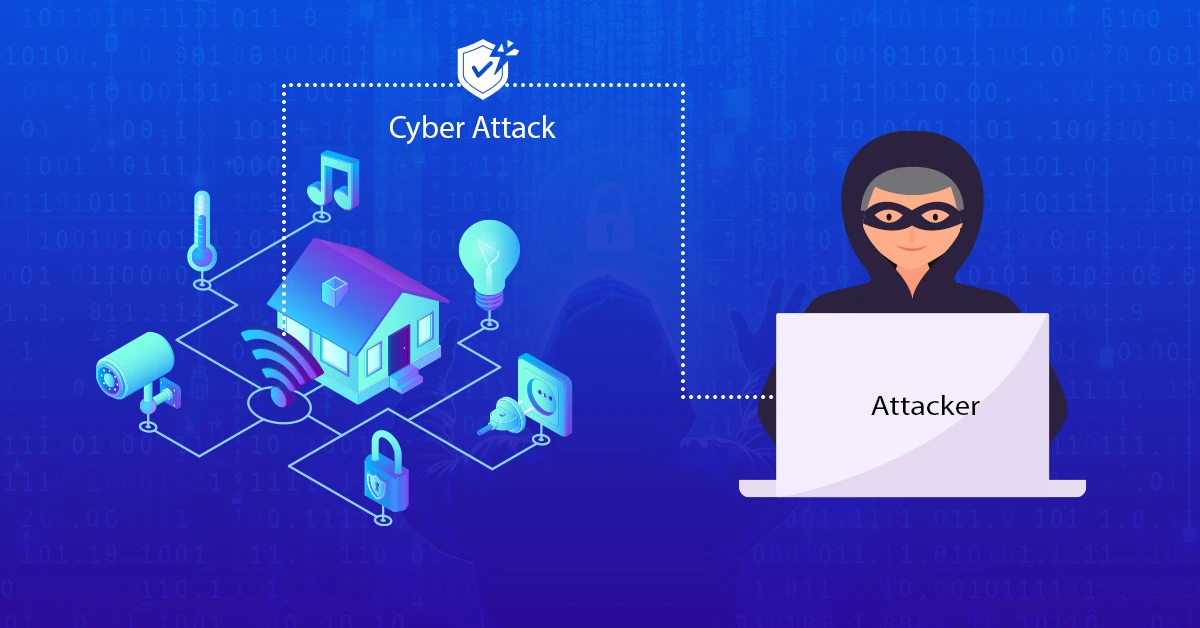
“Shadow IoT” refers to unauthorized devices connecting to municipal networks without the knowledge or oversight of IT personnel. These rogue endpoints represent a major security blind spot and could bypass existing policies and firewalls. Smart city environments must employ network access controls and asset discovery tools to ensure only authorized devices are permitted to communicate within operational networks. (SISA InfoSec)
5. Supply Chain and Third-Party Software Risks
IoT ecosystems often rely on third-party software, APIs, and hardware components. If any part of that supply chain lacks transparency or due diligence, a vulnerability in a single external component can compromise the entire system. Third-party risk assessments and software composition analysis are essential to securing every layer of IoT infrastructure, particularly in public environments where stakes are high. (CyberArk)
6. Physical Security and Endpoint Hardening
Although cyber threats dominate discussion, physical security of IoT devices should not be overlooked. Public-facing sensors, kiosks, and smart lighting systems can be tampered with or physically accessed by intruders. Devices must be installed with tamper-proof enclosures, local encryption, and read-only OS partitions to prevent unauthorized configuration changes. Smart cities require a unified approach that considers both digital and physical vectors of intrusion.
Engage with Experts at the 2025 NCLGISA Spring Symposium
Professionals and municipal decision-makers looking to advance secure smart city deployments are encouraged to visit Varidx at the 2025 NCLGISA Spring Symposium. In partnership with SELS Solar, Varidx is showcasing intelligent, sustainable urban technologies including solar-powered smart lighting, AI-powered transit bots, people-counting IoT sensors, and queue management solutions. These tools directly support safer, data-informed infrastructure planning and public service delivery. Visit the Varidx booth to experience real-time innovations that prioritize functionality, security, and public engagement.