

Modern mobility promises speed, convenience, and sustainability. But across the U.S., digital-only transit models—like app-based ticketing or mobile-exclusive fare systems—are leaving millions behind. As cities push for smarter transit, they must ensure solutions are inclusive of all demographics, including those who are unbanked, digitally underserved, or elderly. Otherwise, the tech-forward shift risks reinforcing existing inequalities.
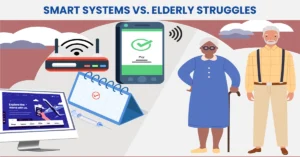
Smart Transit Leaves Many Behind Without Offline Options
Digital transformation in transportation often assumes everyone has access to smartphones, bank accounts, and stable internet. But that’s far from reality. According to the FDIC’s 2023 National Survey, around 4.2% of U.S. households (about 5.6 million people) remain unbanked, and 14.2% (nearly 19 million people) are underbanked (https://www.fdic.gov/analysis/household-survey/2023report.pdf). Many of these individuals rely on public transit but can’t access mobile apps, tap-to-pay wallets, or digital-only rewards programs.
This issue is particularly pronounced in urban areas with large immigrant or low-income populations. Riders who rely on cash, paper tickets, or government subsidies are often left out when agencies remove offline payment channels. If smart mobility doesn’t support all passengers, it loses its credibility as a public service and risks creating a two-tier transit system—one for the connected, and one for the excluded.
Offline Systems Create Equity and Build Long-Term Trust
Building in offline options is more than an accessibility fix—it’s a trust-building strategy. Physical kiosks, reloadable smart cards, and cash-accepting vending machines allow unbanked users to participate in modern transit without needing a smartphone or credit card. According to a Visa Economic Empowerment Institute case study, agencies that adopted open-loop contactless payments saw ridership boosts of up to 35%, but only when legacy and offline payment modes remained in place. (https://usa.visa.com/visa-everywhere/blog/bdp/2023/03/15/open-loop-transit-systems-1678895707653.html).
Successful pilots like Clipper 2.0 in the Bay Area and WMATA’s “Tap. Ride. Go.” in D.C. prove that transit systems can integrate modern convenience with traditional access. They show that maintaining hybrid payment systems builds trust, especially in underrepresented communities. These models aren’t just more equitable—they’re more resilient when systems go down or networks fail.
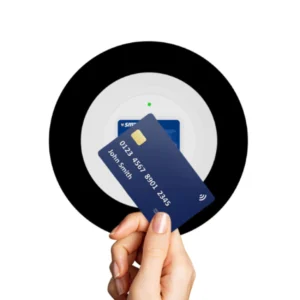
Smart, Inclusive Infrastructure Costs More but Pays Off
Inclusive infrastructure often requires higher initial investment: more hardware, multiple service platforms, and user education programs. But these costs pay dividends in system usage and public perception. A 2024 report by the American Public Transportation Association (APTA) notes that ridership increased significantly in cities that maintained hybrid payment systems and multilingual user interfaces, particularly in diverse neighborhoods.
Providing offline alternatives also helps during disruptions. Natural disasters, cyberattacks, or simple connectivity issues can bring digital-only systems to a halt. Hybrid systems act as a fallback, ensuring no passenger is stranded. Moreover, inclusive transit initiatives unlock broader federal funding tied to equity benchmarks—a key part of the USDOT’s Complete Streets and Justice40 programs.
Designing for Equity Starts with Data and Public Input
Smart mobility must be rooted in community insight, not assumptions. Agencies should use geospatial tools and census data to map underserved zones and consult directly with riders who have limited digital access. Human-centered design can ensure kiosks are easy to use, fare policies are transparent, and signage is accessible to all literacy levels.
This approach is reflected in smart mobility consulting frameworks adopted by several U.S. tech innovators. For instance, while Varidx works broadly in smart transportation strategy, its modular systems approach aligns with principles of inclusivity—allowing transit agencies to plug in equity-focused modules like accessible ticketing or low-tech fare validators without overhauling entire platforms. (https://varidx.io/)
Final Takeaway: Smart Transit Only Works When It Works for Everyone
Tech-driven transit is only truly smart when it includes all riders. Without thoughtful integration of offline, inclusive systems, even the most advanced infrastructure can deepen societal divides. But with community feedback, modular infrastructure, and multi-channel access, transit becomes what it’s meant to be: public, equitable, and empowering for all.
Whether designing a new contactless fare system or scaling adaptive traffic signals, cities must ensure their smart investments are built to include—not exclude. That’s where smart mobility meets social responsibility—and where lasting progress begins.