

City CIOs do not often talk about pressure. Their work rarely appears in headlines unless something fails. When systems run smoothly, no one notices. When they break, everyone does.
The role sits in a narrow space between invisibility and accountability. It is operational, strategic, and deeply interconnected.
What keeps most City CIOs awake is not the next software rollout. It is trust.

The Invisible Promise
Every digital initiative carries an unspoken commitment.
When a city modernizes mobility systems, deploys environmental monitoring, upgrades public works platforms, or integrates public safety technology, it signals improvement. Faster response. Better coordination. Clearer oversight. Residents may not see the architecture behind these systems, but they feel the outcomes.
Behind each initiative stands the CIO.
They understand that if systems falter during a storm, a peak traffic window, or a public event, the conversation will not focus on integration layers or data pipelines. It will focus on reliability. On whether the city delivered when it mattered.
Trust once shaken is not easily restored. That awareness follows the CIO long after office hours.
Time Is Never Neutral
In municipal operations, time behaves differently.
Five minutes during routine conditions may feel manageable. The same five minutes during a flash flood, infrastructure failure, or emergency escalation can multiply consequences quickly. Digital systems now sit at the center of these moments.
CIOs are not only concerned with uptime metrics. They think about what happens when multiple systems are under pressure at once. When traffic platforms, environmental sensors, and emergency coordination tools must function together seamlessly.
The question is not simply whether dashboards load. It is whether decisions can still be made confidently and quickly.
Speed is not purely technical performance. It is structured coordination. And structured coordination requires clarity across departments.
Accountability at Scale
Modern cities operate across layers. Transportation intersects with emergency services. Environmental monitoring connects with public communication. Parks operations link with maintenance planning and safety management.
Digital infrastructure threads through all of it.
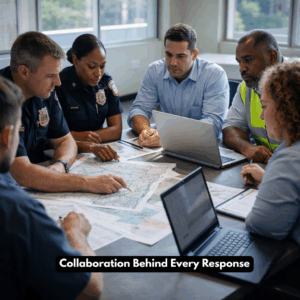
That makes the CIO’s responsibility uniquely broad. They are not just maintaining technology. They are overseeing how information flows between departments, how alerts escalate, and how responses are coordinated.
When an issue emerges, the risk is not always system failure. Often, it is confusion. Unclear roles. Undefined escalation paths. Decision authority that is implied rather than documented.
Confusion slows response. Slow response erodes confidence.
Platforms built for structured operational alignment, such as Varidx, focus on connecting mobility, environmental, and infrastructure systems within defined workflows rather than isolated dashboards. The emphasis shifts from visibility alone to coordinated action.
More on this structured approach can be explored at https://varidx.io/.
Public Expectation Has Quietly Changed
Residents experience their city as a single system, even if internally it operates through multiple departments.
If evacuation alerts arrive late, if congestion spirals without communication, or if services appear disconnected, public confidence shifts quickly. Digital infrastructure is no longer optional support. It is part of civic credibility.
Each modernization effort raises expectations. Each new integration increases reliance.
CIOs operate within that tension. Innovation must continue. Stability must be protected. Moving too slowly risks stagnation. Moving too quickly risks strain.
The balance between progress and reliability defines the role more than any single technology initiative.
Technology Is the Easier Layer
Most CIOs will admit that technical integration challenges can be solved. Vendors can connect systems. Platforms can aggregate data. Infrastructure can be upgraded.
The more complex work lies in alignment.
Alignment between IT and operations. Between departments. Between policy and platform. Between alert and authority.
When governance structures are clearly defined, technology supports operations quietly. When governance is ambiguous, even the most advanced systems introduce friction.
That is why operational clarity often matters more than feature expansion. Integrated platforms that embed escalation paths and defined accountability reduce uncertainty. They replace informal coordination with structured response.
This shift from connectivity to accountability is becoming central to resilient digital infrastructure.
The Quiet Benchmark
Many City CIOs carry an internal benchmark, even if they never state it publicly.
If a critical alert triggers outside normal hours, does everyone know what happens next?
If multiple departments must coordinate, is that process predefined or improvised?
If public communication is required, is the data defensible and consistent?
They are not seeking perfection. They are seeking predictability.
Predictable systems. Predictable workflows. Predictable accountability.
Predictability reduces friction. It reduces hesitation. It allows decisions to move forward without second-guessing.
And that is what brings operational confidence.
Leadership Without Spotlight
City CIOs rarely stand in front of cameras when systems perform as expected. Their success is measured in problems that do not escalate. In crises that remain contained. In departments that trust shared systems enough to act without delay.
They operate in the background, maintaining continuity.
Trust. Response time. Accountability.
When these align, cities feel coordinated and stable. When they drift apart, tension builds quietly behind the scenes.
That is what keeps City CIOs awake.
Not the next technology trend. Not the next procurement cycle.
But whether the systems under their watch, and the trust built around them, will hold steady when the next challenge arrives.