

The U.S. faces a shifting environmental terrain: sinking coastal cities, rising temperatures, and evolving land use demands. Traditional landscape planning no longer keeps pace with these changes. Every city’s green spaces, parks, and open areas must now adapt in real-time, stay sustainable, and serve shifting urban needs. That’s where AI and Machine Learning (ML) step in — not as flashy gimmicks, but as powerful tools reshaping how we design, manage, and preserve our urban environments.

Tackling Sustainability and Climate Adaptation
Traditional planning struggles to respond swiftly to environmental stressors like extreme heat or sea-level shifts. Landscape plans often feel dated the moment they’re implemented. With cities sinking faster than sea levels rise, as a January 2025 NASA–led study revealed, cities from New Orleans to Miami need smarter strategies to protect infrastructure and public spaces. The Times of India
Enter AI-powered predictive modeling. These systems can forecast ecological shifts—like urban heat islands—with data from satellites, sensors, and weather feeds. For instance, U.S.-based researchers recently used multi-source data and ML to pinpoint heat hotspots and recommend mitigation such as green roofs or reflective surfaces.Prism → Sustainability Directory This kind of proactive planning enables more resilient design interventions—before damage kicks in.
Designing Smarter, Not Harder
Designing open spaces that optimize thermal comfort, safety, and aesthetics is complex. Traditional methods take months—or years.
A recent AI-based framework developed in urban research uses explainable ML to rapidly optimize factors like sky view and sight lines while suggesting minimal design tweaks—cutting design time drastically.arXiv This kind of intelligent, interpretable modeling helps urban designers adjust layout dynamically, improving comfort and environmental resilience.
Preserving Urban Nature with Precision
Monitoring biodiversity in cities is resource-intensive. Field surveys are slow, and many species go undetected amid urban expansion.
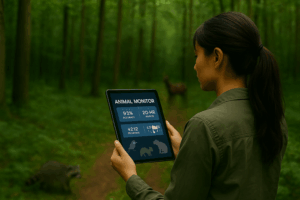
Cutting-edge AI systems are now combining remote sensing, cameras, and citizen-science data to track wildlife in cities with over 90% accuracy.arXiv These models not only identify species but also forecast how urban development impacts biodiversity—giving planners actionable conservation insights grounded in data, not guesswork.
The Challenges Ahead
These innovations are powerful, but not without hurdles. AI models depend heavily on reliable data—something that many urban datasets lack. Ensuring equity and privacy in AI deployment is also critical. And cities must invest in upskilling staff to interpret and act on AI insights effectively.Columbia Climate School
The Bottom Line
AI and ML are more than just tech trends—they’re climate-smart design tools for 21st-century America. Whether it’s keeping coastal cities resilient or preserving urban biodiversity, these technologies offer scalable, adaptive solutions that traditional methods can’t match.
Imagine landscapes that adjust to climate stress, public parks designed via rapid AI insights, and ecosystems monitored in real time. That future is possible—and already unfolding across U.S. cities.
At Varidx, we believe technology must empower people and communities, not just planners and policymakers. By bringing together real-time data, predictive analytics, and intuitive platforms, we help cities turn AI insights into action—building landscapes that are not only smarter, but also more resilient and inclusive.