

Parks have long served as the heart of a community, offering space to walk, exercise, relax and connect. But as cities evolve, these green spaces are taking on an additional, quieter role. Through connected sensing and IoT-driven intelligence, parks are becoming digital touchpoints that support public health, improve safety and give city leaders real-time insight into how their communities move and behave. This shift doesn’t replace the traditional purpose of parks. Instead, it strengthens it—making them cleaner, safer and more responsive to the changing needs of the people who rely on them every day.
Parks as Urban Indicators
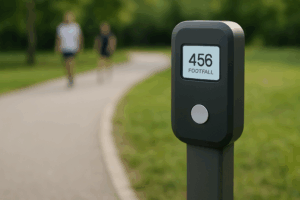
A park’s daily rhythm reveals a surprising amount about the city around it. Everything from how visitors move through trails to how weather affects attendance provides clues that can guide better planning. In the past, agencies depended on manual surveys and periodic headcounts, which offered only a brief snapshot of activity. IoT technology changes this by providing continuous visibility. Sensors along trails and entry points quietly record footfall patterns, identify peak usage hours and show which areas of a park are used the most. Over time, this data becomes a reliable indicator of how community behaviour shifts with seasons, events or environmental conditions.
Environmental Intelligence That Improves Wellbeing
The feel of a park is determined by factors the public senses but cannot measure—air quality, soil moisture, humidity pockets, heat variations and shaded versus exposed areas. IoT tools make these invisible conditions tangible. Air quality sensors help agencies understand when pollutant levels rise and which areas are impacted the most. Soil monitoring prevents overwatering while keeping lawns and landscapes healthy. Microclimate sensing reveals where heat builds up and where visitors experience the most comfort. With this data, parks become more resilient. Teams can adapt watering schedules, plant trees in heat-heavy zones, or adjust maintenance practices to keep environments healthier for everyone.
Adaptive Lighting That Enhances Safety
Lighting plays a major role in how safe and comfortable parks feel, especially in early mornings or late evenings. Traditional systems rely on timers rather than real-world activity, often leaving lights on unnecessarily or leaving areas dim when people are still around. Smart lighting systems adjust automatically based on movement. When visitors approach, paths illuminate; when the area clears, lights dim to conserve energy. This simple shift dramatically improves user experience while reducing operational costs. Trails feel more inviting, families stay longer after sunset and cities benefit from more efficient power consumption.
Understanding Footfall for Better Planning
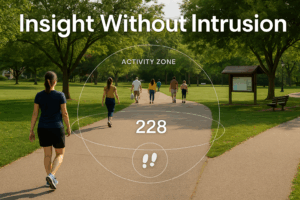
Footfall data might seem straightforward, but it’s one of the most influential inputs for planning and operations. Continuous people-counting reveals which entrances are most active, how visitors move between facilities, where congestion forms and how events or seasonal changes affect attendance. This clarity supports everyday decisions such as where to position staff, when to prioritize cleaning or which amenities require expansion. It also strengthens long-term planning by giving agencies solid evidence when proposing upgrades, making budgets more defensible and development strategies more precise.
Safety Through Pattern Awareness, Not Surveillance
Modern park safety requires awareness without compromising privacy. IoT sensors help achieve that balance. Instead of relying on intrusive surveillance, lightweight motion and presence sensors detect unusual or after-hours activity, identify patterns that need attention and alert teams when areas become unexpectedly busy. These systems track movement rather than personal identity, giving parks a way to respond quickly to risks while maintaining the open, community-friendly environment that visitors expect.
Supporting Accessibility and Movement
Parks play a crucial role as connectors within a city’s mobility network. They lead to neighbourhoods, bus stops, recreation centres and walking routes. Understanding how people arrive, where they walk and which areas they avoid helps create more accessible and intuitive spaces. IoT insights reveal where pathways need repairs, where new signage may help, and where lighting or shade can improve the user experience. Over time, these improvements reshape parks into spaces that welcome everyone—seniors, families, joggers, cyclists and people with mobility needs.
From Smart Parks to Smart Cities
A smart city isn’t built all at once. It grows through small, thoughtful improvements that make public spaces easier to manage and more enjoyable to use. Parks are the perfect place to begin because they touch every part of community life and their upgrades benefit people immediately. As parks begin to generate reliable, real-time data, this information also informs decisions in neighbouring systems such as traffic, sustainability planning, local transit and emergency response. In this way, parks become active contributors to the city’s intelligence network.
Where Varidx Fits In
Varidx provides connected sensing and analytics tools designed specifically for outdoor community environments. Our platform helps parks and recreation teams see what’s happening in real time—track footfall, monitor environmental conditions, improve safety awareness and plan maintenance more efficiently. These capabilities support day-to-day decisions while also giving leaders the long-term insight they need to build healthier, more resilient public spaces. The goal is not to replace what makes parks meaningful, but to enhance their impact with information that is simple, clear and immediately useful.