

Parks and recreation departments across the U.S. are facing shifting expectations. Communities want cleaner spaces, safer trails, better lighting, and facilities that can adapt to changing weather and visitor patterns. At the same time, agencies are under pressure to manage costs, improve maintenance efficiency, and show measurable impact.
IoT is helping bridge this gap — not through dramatic, high-visibility overhauls, but through small, steady improvements that make daily operations smoother and community experiences noticeably better. These upgrades are subtle, but their impact is felt every day.
This blog explores how connected sensing and real-time data are reshaping parks and recreation systems across the country, and why more agencies are beginning to view IoT as part of their essential toolkit.
Smarter Maintenance That Reduces Operational Waste
Maintenance teams manage unpredictable usage patterns — busy weekends, quiet weekdays, weather-driven surges, and seasonal changes. Traditional schedules often lead to over-servicing some areas and under-servicing others.
Connected sensors change this dynamic.
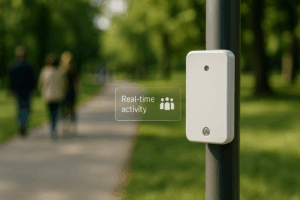
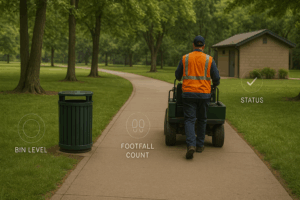
Waste bins, restrooms, and high-activity zones can send real-time alerts when attention is needed. Activity sensors show which areas receive the most footfall, helping teams prioritize routes based on actual conditions.
Across U.S. municipalities, this shift toward data-driven maintenance has shown:
- reduced unnecessary trips
- faster response in high-traffic zones
- cleaner visitor areas without increasing staff load
For parks operating with tight budgets, these optimizations create meaningful, measurable savings.
Visibility Into How Spaces Are Used
Understanding when, where, and how people use parks has always required manual counts, periodic surveys, and staff observation. While helpful, these snapshots rarely reflect daily usage patterns.
IoT provides continuous visibility.
Footfall sensors track visitor movement throughout the day, highlighting:
- peak activity times
- underused zones
- popular walking paths
- areas experiencing congestion
This information supports decisions about staffing, programming, lighting schedules, and where to invest in new amenities. It also helps agencies present data-backed insights when requesting funding or planning capital projects.
Lighting That Responds to Real Activity
Lighting is one of the largest ongoing expenses in parks and public spaces. Fixed schedules often keep lights on when areas are empty, or they turn on too late for early-morning or late-evening visitors.
Adaptive lighting systems respond intelligently.
Lights brighten when people are present and dim when areas are empty, improving both comfort and efficiency. Cities that have implemented adaptive systems report notable reductions in energy consumption and longer equipment life.
This is a quiet upgrade that users feel instantly — trails feel safer, evening activity increases, and energy budgets stretch further.
A Stronger Layer of Safety
Public spaces require visibility after hours and during low-traffic periods. But staffing every location isn’t realistic.
Sensors add a lightweight layer of situational awareness.
They detect:
- activity in sensitive or restricted areas
- unexpected movement after hours
- disturbances around equipment or storage areas
This helps agencies respond sooner and reduce risk — without relying on heavy surveillance infrastructure. Importantly, modern systems track patterns, not personal identity, keeping privacy intact.
Environmental Awareness and Flood Preparedness
Weather conditions are becoming more unpredictable, particularly in coastal and flood-prone states. Parks often act as first-impact zones, making early awareness essential.
IoT supports environmental readiness through:
- water-level alerts
- soil moisture monitoring
- real-time weather-linked insights
- early warnings during sudden rainfall
This helps teams close trails sooner, prevent damage to facilities, and keep visitors safe. For states like North Carolina and South Carolina, where heavy rain and flash flooding are recurring challenges, IoT-based monitoring is becoming increasingly valuable.
Better Mobility in and Around Recreation Areas
Recreation zones interact with parking, nearby roads, walking trails, and event spaces. Tracking mobility helps agencies plan for weekend surges, large gatherings, and seasonal programs.
Sensors can map:
- parking occupancy
- congestion points
- trail movement patterns
- pedestrian flow during events
These insights lead to smoother access, less crowding, and better-informed planning for both small parks and large recreation campuses.
Why These Quiet Upgrades Matter
The most significant benefit of IoT in parks isn’t the technology itself — it’s the way it supports teams who already understand their communities.
Departments gain the ability to:
- respond faster
- plan more accurately
- use budgets more efficiently
- keep spaces safer
- show measurable impact to leadership and residents
These are the kinds of improvements that build trust with the public and amplify the value of parks and recreation systems across the U.S.
Where Varidx Fits In
Varidx provides connected sensing and analytics tools designed specifically for public spaces, outdoor environments, and community infrastructure. Our platform helps agencies turn raw data into practical insights — without adding complexity to their workflows.
From people counting to environmental sensing, Varidx systems are built to support everyday decision-making, maintenance planning, and long-term community investments.
Meet Us at the 2025 Carolinas Conference
Varidx will be exhibiting at the Carolinas Conference hosted by the North Carolina Recreation & Park Association (NCRPA) from December 1–3, 2025 in North Charleston, South Carolina.
If you’re attending, stop by our booth to explore how real-time intelligence can support the future of parks and recreation in your community.
https://varidx.io/varidx-at-the-2025-carolinas-conference/