
Most city problems do not begin as emergencies.
They begin as small signals.
A traffic slowdown that starts at one junction.
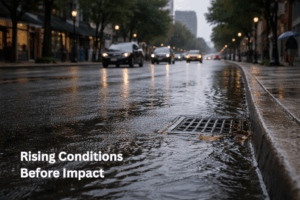
Water levels that rise just enough to feel unusual.
A park pathway that becomes crowded faster than expected.
A system alert that shows something is slightly off.
For city operations teams, these moments matter most. They represent a short window where action is still easy, cost is still low, and outcomes are still controllable. Often, that window is about 30 minutes.
And yet, it is the window cities miss most often.
Why Timing Matters More Than Scale
Cities rarely struggle because they lack infrastructure. Roads exist. Sensors exist. Control rooms exist. What fails is timing.
Information reaches the right people too late.
Decisions are made after conditions escalate.
Response begins once the public is already affected.
By the time congestion alerts are issued, traffic has already peaked. By the time flood warnings go out, streets are already underwater. By the time maintenance crews are dispatched, systems have already broken.
This pattern is not limited to large urban metros. Towns and cities of every size experience the same early signals. The difference is not scale, but how quickly those signals are recognized and acted upon.
Research from the U.S. Federal Emergency Management Agency consistently shows that early situational awareness is one of the strongest predictors of effective response, often outweighing the scale of infrastructure itself. (https://www.fema.gov/emergency-managers/practitioners)
The Anatomy of a Missed Window
In most cities, the 30-minute window is lost in transition.
Data is collected in one place.
Reviewed in another.
Validated by a third team.
Escalated through emails, calls, or static reports.
Each step adds minutes. None of them are unreasonable on their own. Together, they push response past the point where it matters most.
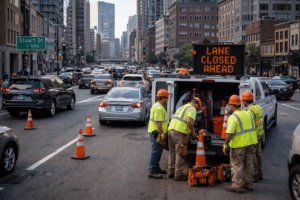
This challenge is especially visible in cross-department scenarios. Traffic affects emergency response. Weather affects parks and drainage. Public events affect transport, safety, and sanitation at the same time. When systems and teams operate in silos, early signals fail to turn into early action.
City leaders and CIOs understand this reality well. The issue is not lack of awareness. It is the structural delay built into how information flows.
Why Reports Arrive Too Late to Help
Many urban systems still rely heavily on summaries, averages, and post-event reporting. These tools are useful for audits and long-term planning. They are far less useful during the first moments when conditions are actively changing.
According to the National Institute of Standards and Technology, real-time data sharing and interoperability are critical for modern urban resilience, particularly during rapidly evolving situations. (https://www.nist.gov/programs-projects/smart-cities-and-communities)
Operational teams need live context. What is happening now. Where conditions are shifting. Which locations are trending toward risk. Without this visibility, response becomes reactive by design.
What Faster Awareness Actually Looks Like
Faster awareness does not mean more dashboards. It means fewer handoffs.
It means traffic, environmental, and infrastructure signals are visible together, not fragmented across systems. It means alerts are shared across departments automatically, not forwarded manually. It means operators see patterns forming, not just incidents that have already peaked.
This approach is increasingly relevant in parks and public spaces, where crowding, weather, safety, and maintenance intersect. The National Recreation and Park Association highlights the growing role of data in proactive park operations and public safety planning.
(https://www.nrpa.org/our-work/Three-Pillars/)
Where Varidx Joins In
This is where Varidx plays a quiet but important role.
Varidx works with towns, cities, and public agencies of all sizes to enable faster awareness and smoother coordination across operational systems. By integrating live data from diverse sources and making it usable in real time, Varidx helps city teams move earlier, not louder.
The goal is not to replace existing tools or add complexity. It is to reduce delay. To help the right people see the right signals at the right moment, so action can begin while the window is still open.
Why the 30-Minute Window Matters for City Leaders
For City CIOs and operations leaders, the future challenge is not building more infrastructure. It is learning how to act sooner with what already exists.
Smart city capabilities are not limited to mega cities. Towns and cities of every size face the same early warnings, subtle congestion, rising water levels, unexpected crowding, system anomalies. When AI is applied thoughtfully, it helps these signals surface earlier and reach the right teams faster.
AI adoption benefits towns and cities alike by reducing manual handoffs, improving coordination, and enabling response while outcomes are still controllable. The advantage comes from timing, not from the size of the city or the volume of technology deployed.
As cities grow more complex and risks become less predictable, response time becomes a defining capability. The cities that perform best will not be the ones with the most technology, but the ones that recognize change early and move together.
The 30-minute window will always exist. What can change is whether it is missed.
Closing Thought
Cities do not need to become perfect. They need to become timely.
When awareness arrives early, coordination becomes easier. When coordination improves, outcomes follow. And when action happens within that first critical window, the difference is felt by everyone, even if they never see the systems behind it.
That is the quiet power of faster awareness. And it is where the future of effective city operations is already taking shape.
Reference Links
- FEMA – Emergency management and situational awareness
https://www.fema.gov/emergency-managers/practitioners - NIST – Smart cities and real-time data interoperability
https://www.nist.gov/programs-projects/smart-cities-and-communities - NRPA – Data-driven park and recreation operations
https://www.nrpa.org/our-work/Three-Pillars/