
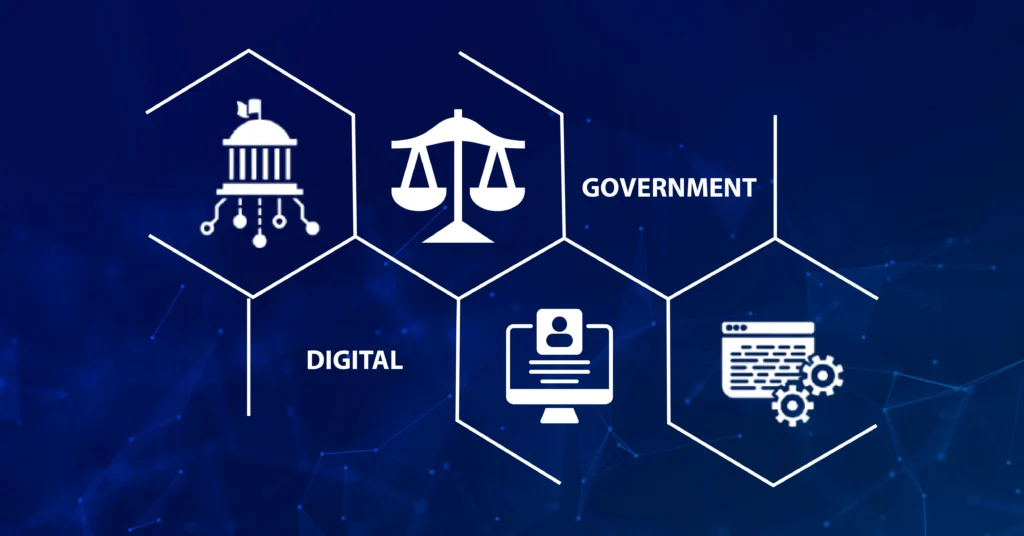
With increasing demand for responsive and inclusive governance, city IT departments across the United States are becoming strategic enablers of public service delivery. By building and managing digital citizen service platforms, these departments help municipalities meet rising expectations for access, transparency, and operational efficiency. Their work is central to the advancement of smart city frameworks nationwide.
Multilingual and AI-Powered Access to Public Services
Cities are investing in multilingual, AI-powered communication platforms to meet the needs of increasingly diverse populations. In February 2024, the City and County of Denver introduced a generative AI chatbot that communicates in 72 languages. This platform provides round-the-clock assistance on the city’s website and via text, offering information on common service inquiries such as trash pickup and permitting schedules (https://www.govtech.com/digital-cities-2024-500-000-or-more-population-category).
In addition to text-based tools, voice-enabled platforms are expanding the scope of digital access. CivicReach, for example, is developing local government-specific, on-demand voice AI agents designed to support municipal staff and call centers. These agents respond in multiple languages, handle a higher volume of calls throughout the day, and help reduce wait times while maintaining service quality.
(https://www.civicreach.ai/#top)
These tools demonstrate how artificial intelligence, when implemented by city IT departments, can reduce dependency on call centers while maintaining consistency and accuracy in information delivery. They also expand service reach without requiring additional staffing—an increasingly critical factor under constrained municipal budgets.
Data Centralization and Cross-Departmental Coordination
Scottsdale, Arizona has built a centralized data platform supported by citywide data governance protocols. This system provides timely access to citywide performance metrics, including police response rates and infrastructure condition data, allowing departments to coordinate with greater efficiency (https://www.govtech.com/digitalcities2024).
By organizing and sharing real-time data across municipal agencies, IT departments create the foundation for transparent decision-making. Residents benefit through simplified access to service dashboards and performance reports, contributing to a more informed public dialogue around urban issues.
Public Wi-Fi Infrastructure and Digital Equity
San Diego’s IT-led initiative, SD Access 4 All, expanded public Wi-Fi access to 400 locations including parks, libraries, and shelters. Since implementation, the platform has recorded over 3.5 million Wi-Fi sessions and supported more than 210,000 unique users, helping bridge the digital divide for underserved populations (https://www.govtech.com/digitalcities2024).
This infrastructure supports broader digital service delivery by ensuring that residents can access online portals, civic apps, and virtual town halls. Public Wi-Fi is not only a convenience; it is now a baseline requirement for inclusive participation in government processes.
Operational Efficiency through User Segmentation
According to research by Deloitte, successful digital citizen service strategies often rely on user segmentation to address varying expectations. Their report identifies four digital user types in the public sector: supportive, skeptical, convenience-driven, and service-first. This segmentation allows IT departments to prioritize platform usability and tailor content delivery across channels (https://deloitte.wsj.com/cmo/how-segmentation-can-help-governments-transform-digital-interactions-e2f26f69).
Digital platforms designed with these behavioral insights are more likely to achieve higher adoption rates and reduce friction in user experience. IT departments that apply these principles can deliver targeted engagement strategies that align with citizen needs.
Relevance to Urban Planning and Governance Events
For the architecture-focused audience, SELS Solar’s landscape lighting solutions provide ambient, in-ground illumination for pedestrian areas and water features—installed without disruptive excavation, combining safety with aesthetic appeal.

These developments align closely with the themes of the upcoming NCASLA Spring Conference. Sessions such as “US Cities Adopting Digital Citizen Services for More Responsive Government” provide a forum for municipal leaders, IT professionals, and urban planners to examine the systems that support resident interaction. The examples from cities like Denver, Scottsdale, and San Diego offer replicable models for peer municipalities.
As cities face ongoing challenges in public engagement and digital service delivery, events like NCASLA play a pivotal role in facilitating knowledge exchange and policy refinement based on real-world applications.
Visit the Varidx booth at NCASLA to see these technologies in action. Speak with our team about scalable solutions that meet the current demands of your community and support forward-thinking urban management.