

Modernizing transit isn’t just about technology—it’s about updating the rules that govern it. Across the U.S., outdated city policies often delay the adoption of Adaptive Traffic Control Systems (ATCS) and digital fare systems. These policy barriers stall progress, frustrate riders, and waste public funding. A better path forward is modular: build policy updates in tandem with technological deployment, create regulatory clarity, and work collaboratively with providers to keep the momentum flowing.

The Challenge of Legacy Policies Slowing Innovation
In many U.S. cities, transit modernization hits a wall when legacy regulations block it. Policies written for paper tickets or magnetic-stripe cards don’t account for mobile wallets, QR systems, or account-based fare models. Agencies have reported delays of a year or more waiting for regulatory changes—just to move from pilot to full deployment. According to a policy study, updating fare strategies often takes 6–24 months, with longer timelines for system-wide digital rollouts.
These outdated regulations also limit interoperability and rider accessibility. In Boston and New York, digital fare pilots like MBTA’s contactless payment and MTA’s OMNY have moved forward, but city rules on data use, privacy, and system access have caused delays and limited rollout speed (Market Research Report). Without policy updates, even well-funded tech efforts remain isolated pilots rather than scalable solutions.
The Solution Is Policy Collaboration Alongside Rollout
To accelerate this transition, states and cities must update policy frameworks while pilot systems go live. Agencies can partner with vendors to draft adaptable fare regulations covering API standards, open payment, privacy safeguards, and equity provisions. For instance, the MTC’s new Clipper 2.0 initiative in the Bay Area is coordinating policy updates alongside technical integration—even aligning funding and inter-agency agreements to match rollout timelines (Reddit source).
Cities like D.C. are adopting this modular approach. WMATA’s “Tap. Ride. Go.” rollout scheduled around WorldPride 2025 came with parallel updates on fare capping, regulatory clearance to accept credit cards directly, and momentum from stakeholder engagement (Reddit source). By aligning policy with deployment, agencies can avoid the delays that typically turn pilots into pilot purgatory.
Benefits Include Faster Integration and Clearer Regulation
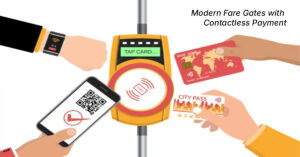
When policy aligns with deployment, integration happens faster and riders benefit sooner. WMATA has already seen an 80% reduction in fare evasion since installing modern fare gates equipped with contactless payment technology, paired with updated payment rules (New York Post).These advanced gates not only speed up boarding but also reduce friction for commuters using digital wallets and tap cards. In New York, OMNY usage reached over 55% of subway rides and 34% of bus trips by late 2024, supported by a policy that extended reduced-fare eligibility to diverse groups (Wikipedia – OMNY).
Clear policy frameworks also help agencies plan budgeting and contracts more effectively. A December 2023 FTA trend report shows that agencies coordinating tech upgrades with concurrent policy reviews reduced project delays by up to a year—and reduced integration costs significantly.
Challenges Require Bureaucracy Navigation and Policy Expertise
Even with a modular policy approach, transit agencies face challenges. Regulatory processes are complex, involving multiple stakeholders (transit boards, municipalities, equity advocates, privacy councils). Update cycles across agencies can span years—rising faster than tech updates (Verified Market Reports).
Moreover, many transit agencies lack staff skilled in technology policy. Digital fare systems require knowledge of cybersecurity, financial regulations (KYC), and data governance. Without in-house expertise or reliable external support, policy teams can become bottlenecks, limiting the ability to keep pace with system upgrades.
Final Takeaway
Modernizing transit isn’t just a matter of installing smarter systems, it’s about creating a smarter framework to support them. Outdated policies are often the unseen bottlenecks that stall innovation, delay benefits for riders, and waste public investment. To move forward, cities must treat policy as infrastructure: built to evolve, aligned with technology, and responsive to changing urban needs. When agencies update rules alongside rollout, covering everything from data use and payment models to equity and access, they unlock faster integration, better rider experiences, and greater long-term value. The future of transit doesn’t just ride on new tech—it rides on the readiness of the rules that govern it.