
For decades, U.S. cities have wrestled with gridlock caused not only by moving cars but also by the way we manage parked ones. Studies show that up to 30% of urban traffic comes from drivers circling in search of a parking spot. The costs are staggering: wasted fuel, more emissions, and mounting frustration for residents and businesses alike. Now, a new wave of “smart curb management” solutions is emerging as one of the most effective ways to tackle congestion head-on.
The Hidden Costs of Outdated Parking Systems
Traditional parking setups in American cities rely heavily on static pricing and limited visibility. Drivers often don’t know where spots are available until they circle a block multiple times. That inefficiency doesn’t just waste time—it worsens local air quality and raises fuel costs. According to the U.S. Department of Energy, idling and stop-and-go driving linked to congestion account for billions of gallons of fuel burned each year (DOE, 2024).
On top of that, curb space has become a high-demand commodity. Delivery trucks, ride-hail services, bike lanes, and outdoor dining all compete for the same limited real estate. When cities don’t modernize how this space is allocated and priced, it leads to friction between businesses, residents, and city planners.
Dynamic Pricing: A Tool for Fairness and Efficiency
Dynamic pricing is one of the most promising strategies to reduce congestion. Cities like San Francisco and Los Angeles have piloted variable parking rates that adjust depending on demand (SFMTA, 2023; LADOT, 2024). When pricing reflects real-time conditions, spots are more likely to be available for those who need them. Drivers spend less time circling, while cities capture revenue that can be reinvested into transit or pedestrian infrastructure.
The U.S. Department of Transportation has noted that well-designed pricing programs can cut cruising traffic by 15–30% (USDOT, 2023). For local businesses, this doesn’t mean customers pay more—it means they can actually find a spot when they need one. By balancing supply and demand fairly, dynamic pricing benefits everyone on the street.
Real-Time Availability: Putting Drivers Back in Control
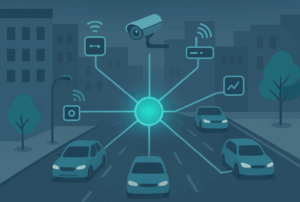
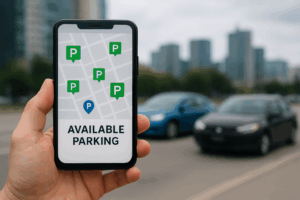
Another key piece of the puzzle is transparency. Modern sensor networks, cameras, and mobile apps can share real-time curb availability directly with drivers. Instead of circling endlessly, a driver can pull up an app and see open spaces within minutes of arrival.
Cities like Seattle and Washington, D.C., are already investing in curbside management platforms that combine parking sensors with open data feeds (Seattle DOT, 2025; DDOT, 2023). This shift not only reduces congestion but also lowers stress for drivers and delivery operators. A smoother flow of traffic ultimately makes streets safer for pedestrians and cyclists too.
Predictive Planning: Looking Beyond the Next Spot
Real-time information solves today’s frustration, but predictive planning tackles tomorrow’s. By analyzing historical patterns—think stadium events, peak delivery hours, or holiday shopping surges—cities can forecast where pressure points will form. Armed with that data, they can adjust curb use or pricing in advance to avoid bottlenecks before they happen.
This kind of foresight requires more than parking meters. It depends on integrated platforms that can bring together feeds from traffic sensors, weather systems, public transit, and even freight operators. That’s where companies like Varidx stand out: their urban mobility solutions are built on strong data integration capabilities that help city managers move from reactive fixes to proactive planning. (https://varidx.io/)
A Smarter, Cleaner Urban Future
Curb management may sound like a small detail, but it’s one of the most direct levers cities can pull to fight congestion and reduce emissions. By combining dynamic pricing, real-time availability, and predictive planning, U.S. cities can transform curbs from a source of daily frustration into a backbone of smarter mobility.
The result is cleaner air, less wasted fuel, and streets that work better for everyone—drivers, businesses, cyclists, and pedestrians. With federal support for sustainable urban infrastructure growing, there’s never been a better moment for American cities to make this shift. The curb may be the next frontier, but it’s one where innovation is already paving the way forward.