


Where Cities Experience Innovation Before It Scales
Across the United States, cities are under constant pressure to improve how they operate. From managing growing populations to maintaining aging infrastructure, the expectations placed on urban systems continue to rise. Citizens expect faster services, better coordination, and more transparency in how cities function. Everyday strain on city operations ...
Read More
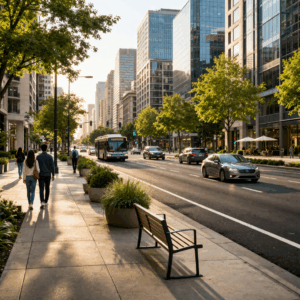
Why Some Cities Feel Easier to Live In Than Others
Some cities just feel easier. You move through your day without friction. Traffic flows better. Services respond faster. Public spaces feel usable. Things work the way you expect them to. And then there are cities where even simple tasks feel harder than they should. The difference is not always about...
Read More

How Cities Can Improve Operations Without Increasing Budgets
Across the United States, city leaders are being asked to deliver better services, faster responses, and more transparency without a corresponding increase in budgets. Rising operational costs, aging infrastructure, and growing populations are stretching municipal resources thin. In this environment, the question is no longer how to spend more, but...
Read More

Running a City Park Isn’t Simple. Here’s Why.
Park and recreation leaders rarely operate in the spotlight, yet their work shapes some of the most visible and valued spaces in a community. Parks are where cities slow down, where families gather, where health, safety, and quality of life quietly intersect. Behind these spaces is a role that demands...
Read More

A New Decision Tool for City Leaders Managing Complex Infrastructure
City leaders today operate in an environment of increasing complexity. Infrastructure networks are aging, populations are growing, and climate-related disruptions are becoming more frequent. At the same time, municipal departments are expected to respond faster, coordinate better, and deliver reliable services across transportation, utilities, and public safety systems. The challenge...
Read More
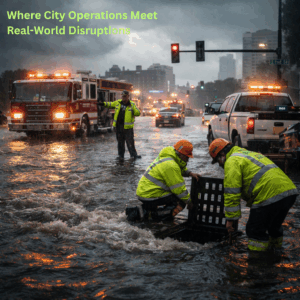
When City Data Speaks, Are We Listening?
Cities today generate more operational data than ever before. Sensors track traffic flow. Infrastructure systems monitor performance. Emergency services record response times. Environmental networks measure air quality and weather conditions. But despite all this data, many city teams still face the same daily question: How do we turn all this...
Read More
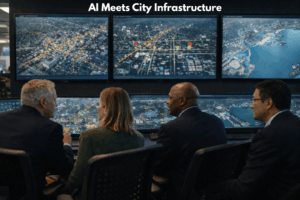
What Would AI Recommend for Your City’s Biggest Operational Challenge?
City leaders today operate in an environment where expectations continue to rise while resources remain limited. From infrastructure management and traffic coordination to emergency response and public services, municipalities are expected to solve complex challenges every day. Yet many cities still rely on fragmented systems, manual monitoring, and reactive decision-making...
Read More

What City CIOs Actually Lose Sleep Over
City CIOs do not often talk about pressure. Their work rarely appears in headlines unless something fails. When systems run smoothly, no one notices. When they break, everyone does. The role sits in a narrow space between invisibility and accountability. It is operational, strategic, and deeply interconnected. What keeps most...
Read More

When Data Exists but No One Is Watching
Cities today don’t suffer from a lack of data. They suffer from a lack of ownership. Traffic sensors stream updates every second. Flood gauges log water levels. Air quality monitors track invisible shifts. Transit systems log delays and route performance. Parks departments capture visitor counts and maintenance cycles. The infrastructure...
Read More

Why Parks Are Becoming Cities’ Most Sensitive Infrastructure
For a long time, parks were viewed as amenities. Nice to have. Good for weekends. Important for quality of life, but rarely discussed in the same breath as roads, power, or water systems. That view is changing. Across U.S. cities, parks are becoming some of the most sensitive pieces of...
Read More
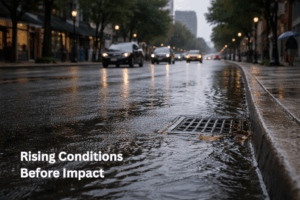
The 30-Minute Window Cities Always Miss
Most city problems do not begin as emergencies. They begin as small signals. A traffic slowdown that starts at one junction. Water levels that rise just enough to feel unusual. A park pathway that becomes crowded faster than expected. A system alert that shows something is slightly off. For city...
Read More
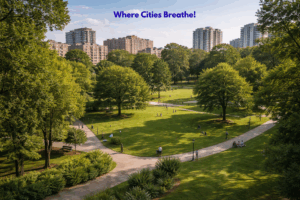
How Parks Help Create a Healthy Environment and a Happy Community
Parks are often seen as simple green spaces within cities. Places to walk, relax, or let children play. Yet their impact goes far beyond recreation. Well-planned parks play an essential role in creating healthier environments and happier communities across the United States. They support physical health, mental wellbeing, social connection,...
Read More
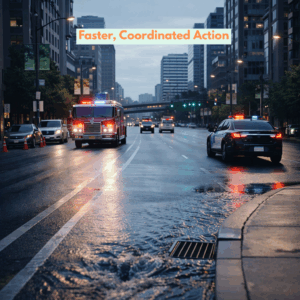
When Cities Know the Problem but Can’t Move Fast Enough
Cities today are not short on data. They see traffic building up before it becomes gridlock. They know which neighborhoods flood first. They track air quality dips, power usage spikes, and public transport delays in near real time. Yet, despite seeing the problem early, action often comes late. This is...
Read More
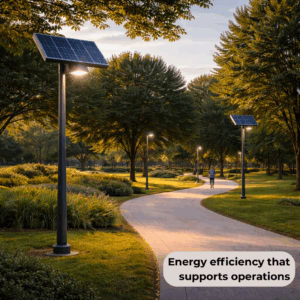
Smart Lighting in Parks: From Better Visibility to Better Operations
For many cities, park lighting is still treated as a basic utility. Lights go on at dusk, turn off at dawn, and get fixed when something breaks. But as public expectations rise and operational pressures increase, this approach is starting to show its limits. Parks today are more than green...
Read More

The Most Expensive City Problem Isn’t Infrastructure — It’s Delay
Cities invest heavily in roads, transit systems, flood defenses, sensors, and digital tools. Yet many of the problems residents experience every day feel unchanged. Streets still clog without warning, flooding disrupts neighborhoods with little notice, and critical infrastructure failures seem to appear out of nowhere. Despite all the spending, cities...
Read More

From Conversations to Deployment: How Cities and Parks Turned Smart City Ideas into Action in 2025
This year-end review is written for city, county, and parks and recreation leaders who spent 2025 balancing limited staff, growing expectations, and increasingly complex systems. Across the year, one theme came through clearly: cities are ready to act, but only when technology helps teams work smarter, not harder. In 2025,...
Read More
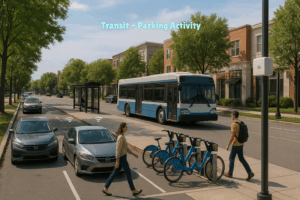
The 15-Minute City Needs a 1-Second Brain: Why Speed of Data Matters
Urban planners across the U.S. are increasingly drawn to the idea of the 15-minute city — walkable neighborhoods where residents can access work, groceries, transit, parks, healthcare, and community services within a short stroll. It’s a compelling vision, and for good reason. Cities want safer streets, lower emissions, and more...
Read More
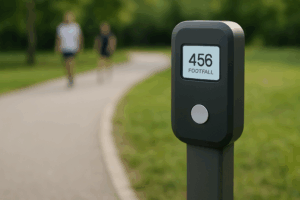
Smart Parks, Smarter Cities: How Green Spaces Are Becoming Digital Infrastructure
Parks have long served as the heart of a community, offering space to walk, exercise, relax and connect. But as cities evolve, these green spaces are taking on an additional, quieter role. Through connected sensing and IoT-driven intelligence, parks are becoming digital touchpoints that support public health, improve safety and...
Read More
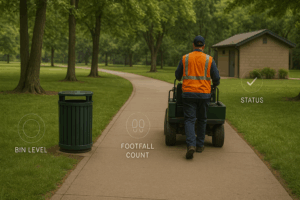
The Future of Parks is Quietly Connected: How IoT is Transforming Community Spaces Across the U.S.
Parks and recreation departments across the U.S. are facing shifting expectations. Communities want cleaner spaces, safer trails, better lighting, and facilities that can adapt to changing weather and visitor patterns. At the same time, agencies are under pressure to manage costs, improve maintenance efficiency, and show measurable impact. IoT is...
Read More
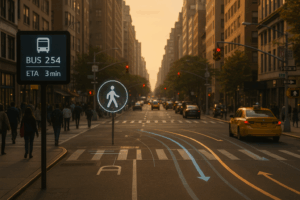
AI in City Life: The Small Fixes Making the Biggest Difference
When people imagine “AI in cities,” the picture usually looks futuristic, robots guiding traffic, drones dropping off groceries, self-driving everything. It is a fun image. It is also nowhere close to what citizens actually interact with each day. The real work of AI in cities is quieter, simpler, and far...
Read More